
ACNE
No
WATER RETENTION
No
HBR
No
HEPATOTOXICITY
No
AROMATIZATION
No
MANUFACTURER
Beligas
WAREHOUSE
International Warehouse 3
SUBSTANCE
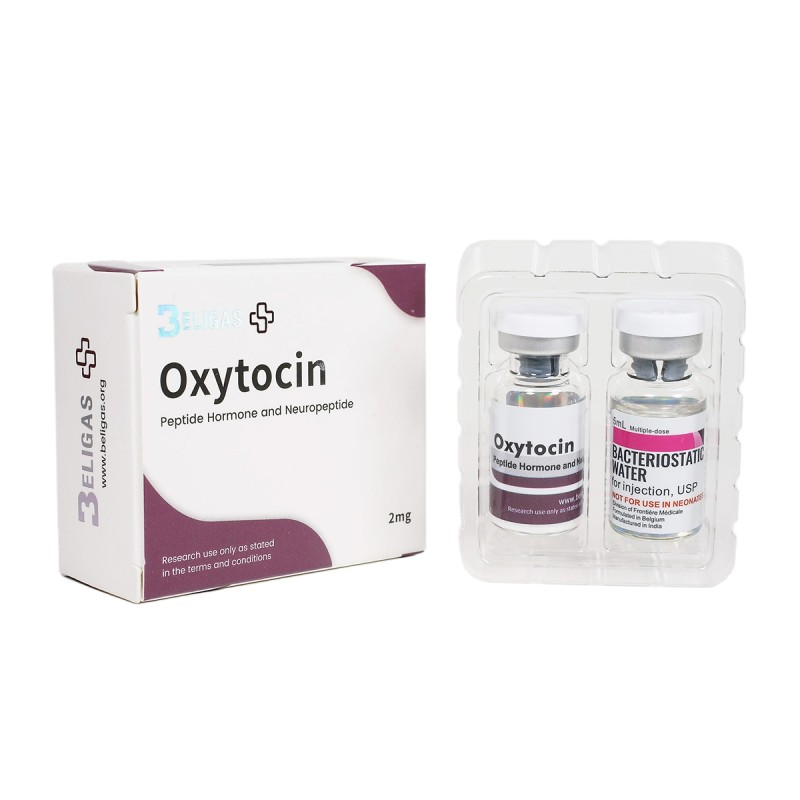
Oxytocin
Oxytocin, often dubbed the "cuddle hormone" or "love hormone," is a vital hormone produced in the posterior lobe of the pituitary gland, nestled at the base of your brain. This remarkable hormone is released during moments of social bonding, such as cuddling or even playful interactions with pets, as highlighted by a study in the journal Hormones and Behavior (2009). However, oxytocin's role is far more nuanced than its affectionate nicknames suggest.
While oxytocin can enhance feelings of love and connection, it may also amplify memories of negative bonding experiences. For individuals with strained relationships, particularly with maternal figures, oxytocin can heighten feelings of wariness towards those perceived as outsiders. Thus, whether oxytocin fosters affection or suspicion is context-dependent.
Oxytocin's Impact on Women
In women's health, oxytocin plays an indispensable role. As noted by behavioral neuroscientist Larry Young from Emory University, this peptide is pivotal during childbirth and lactation. It induces uterine contractions during labor and aids in the uterus's recovery afterward. When a baby suckles, it stimulates oxytocin release, prompting milk production for nourishment.
Moreover, oxytocin strengthens the bond between mother and child. Research indicates that maternal bonding is enhanced by elevated oxytocin levels during pregnancy, encouraging nurturing behaviors like singing or bathing infants. While maternal attachment is not solely biologically driven?since adoptive mothers can bond just as deeply?there is compelling evidence that oxytocin released during pregnancy fosters a profound connection with the baby. Interaction with an infant can also increase the infant's oxytocin levels.
Oxytocin's Role in Men
Oxytocin also enhances bonding in men. A 2012 study found that fathers who received oxytocin via nasal spray were more engaged with their 5-month-old babies than those who did not. However, it's important to note that another hormone, vasopressin, plays a more significant role in men's social connections.
The social effects of oxytocin can be complex. A study involving Dutch students revealed that those given olfactory oxytocin showed greater positivity toward fictional Dutch characters while exhibiting negative attitudes towards characters with Arab or German names. This suggests that oxytocin may primarily enhance social bonding with perceived in-group members, as reported in a January 2011 study published in PNAS.
In a related PNAS study from 2010, men who received oxytocin and reflected on their mothers reported more positive descriptions of maternal care if their relationships were secure. Conversely, those with troubled relationships viewed their mothers less favorably after receiving the hormone. Researchers theorize that oxytocin strengthens social memories, enhancing both positive and negative associations. According to Young, oxytocin connects various brain regions that process social cues, making social information more significant.
Oxytocin Sprays and Considerations
Some researchers are investigating oxytocin sprays as potential treatments for autism, a condition characterized by social interaction challenges. A small 2013 study tested oxytocin on children and teenagers with autism, examining their ability to recognize emotions from photographs. While participants did not improve in emotion recognition, increased activity in brain areas linked to social interaction was observed, suggesting that oxytocin could bolster behavioral therapies for autistic children.
"When considering oxytocin for autism treatment, ensuring a positive social context is essential," remarked Young.
However, the use of oxytocin sprays outside medical supervision remains controversial. Over-the-counter sprays marketed online promise to alleviate stress and enhance social experiences but are not regulated by the FDA, leaving their effectiveness, potential side effects, and ingredient accuracy uncertain.
Extensive studies on the long-term effects of legitimate oxytocin sprays are lacking; most research has focused on single doses. In contrast, Pitocin, a synthetic version of oxytocin used to induce labor, can result in side effects such as nausea, vomiting, and stomach discomfort.