
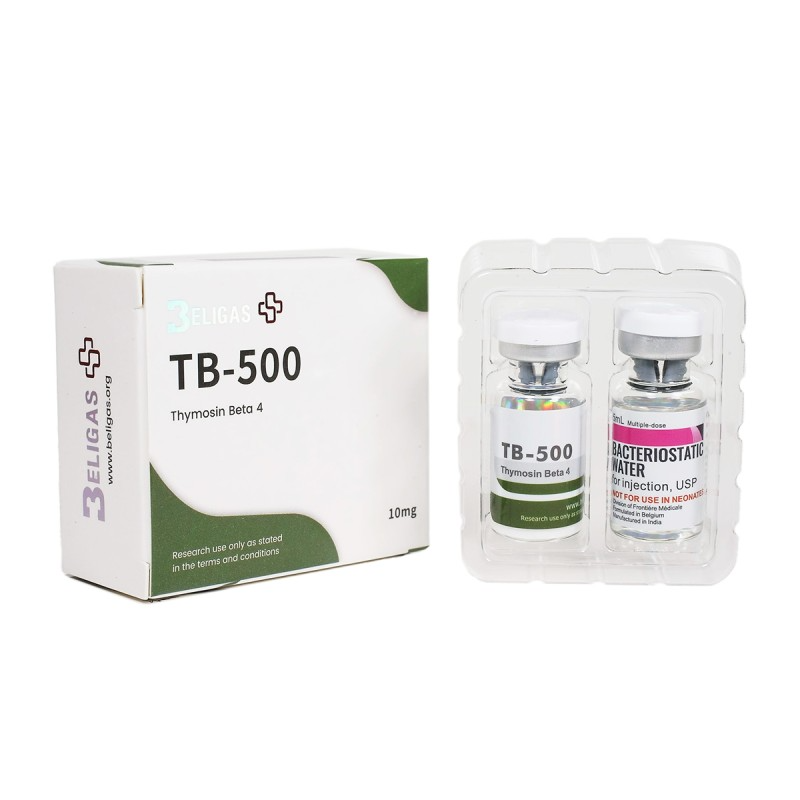
Thymosin Beta 4 (TB-500) 10mg
- Brand: Beligas
- Product Code: Thymosin Beta 4 (TB-500) 10mg
- Availability: In Stock
-
$57.00
CLASSIFICATION
Multifaceted Peptide
ACNE
No
WATER RETENTION
No
HBR
No
HEPATOTOXICITY
No
AROMATIZATION
No
MANUFACTURER
Beligas
WAREHOUSE
International Warehouse 3
SUBSTANCE
Thymosin Beta-4
Introducing TB-500, a synthetic version of Thymosin Beta-4 (TB4), a naturally occurring protein celebrated for its healing properties and found in nearly all human and mammalian cells. Extensive research highlights TB-500's remarkable ability to enhance wound recovery, boost flexibility, promote injury healing, and reduce inflammation. These benefits stem from its vital role in the formation of blood cells and vessels, cellular differentiation, and cell movement. Notably, TB-500 is known for its regulation of actin, a protein essential for effective tissue repair.
TB-500 Dosage
TB-500 is conveniently available as a freeze-dried powder. For optimal results, it?s recommended to reconstitute thymosin peptides using 0.9% bacteriostatic sodium chloride. Typical dosage ranges from 5 mg to 20 mg per week, usually administered through 2-3 injections. Once the peptide accumulates in the body, the dosage can often be reduced to a maintenance level of approximately half the initial dose, which can be taken once weekly.
TB-500 is generally administered via subcutaneous injection, though intramuscular options are also available for those who prefer it.
Storage Instructions for TB-500
To maintain its efficacy, store TB-500 at room temperature in a dry place away from light. An opened vial can be refrigerated for up to 8 days.
Overview of TB-500
Scientific studies on TB-500 have revealed a host of properties that have sparked a global wave of clinical trials exploring its potential in enhancing wound healing in various tissues, including skin, cornea, and heart. Thymosin Beta-4, produced in the thymus gland, is prevalent in wound fluids, underscoring its significant role in tissue repair.
This synthetic peptide boasts high concentrations in blood platelets, wound fluids, and other tissues. Distinct from growth factors, TB-500 primarily functions as an actin-regulating protein, playing a crucial role in protecting, regenerating, and remodeling damaged tissues. Remarkably, the gene for Thymosin Beta-4 is among the first activated post-injury.
As a naturally occurring peptide found in nearly all human and animal cells, Thymosin Beta-4 is pivotal in promoting wound healing. TB-500 assists recovery by fostering the creation of new blood vessels, muscle fibers, and blood cells, while enhancing cell movement. For those facing stress or recovering from injuries, TB-500 offers compelling healing benefits.
Mechanism of Action for TB-500
TB-500 accelerates recovery by influencing actin, enhancing this critical protein's effects, which include promoting cell migration and proliferation. As a result, new blood vessels form, inflammation is managed, and healing processes are optimized. Its unique molecular structure also allows it to traverse the body, reaching areas requiring support. Users frequently report benefits such as reduced inflammation, improved flexibility, and, in some cases, hair regrowth and darkening.
Potential Side Effects of TB-500
While TB-500 is associated with numerous positive outcomes, including expedited recovery, decreased inflammation, and enhanced flexibility, it is especially effective for healing slow-healing injuries in connective tissues like tendons and ligaments, as well as muscle and skin injuries. Users and researchers alike report that TB-500 typically has few, if any, significant adverse side effects.
Some mild side effects, such as lightheadedness or nausea during injection, may occur, and flu-like symptoms are common with many peptides. However, such occurrences with TB-500 tend to be minimal. Overall, TB-500 is generally well-tolerated by users.
Please note that the information provided on this website is intended for informational purposes only and should not replace professional medical advice. It is not intended to diagnose, treat, cure, or prevent any disease.