
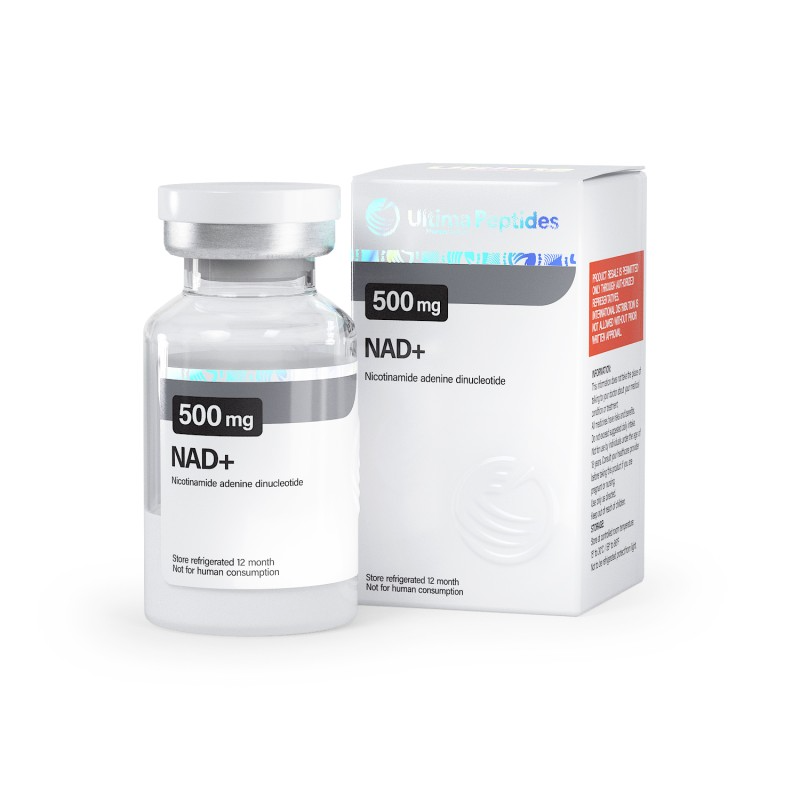
Ultima-NAD+
- Brand: Ultima Pharmaceuticals - US
- Product Code: Ultima-NAD+
- Availability: In Stock
-
$120.00
MANUFACTURER
Ultima Pharmaceuticals - US
WAREHOUSE
USA Warehouse 5
SUBSTANCE
Nicotinamide Adenine Dinucleotide
Discover the power of Nicotinamide Adenine Dinucleotide (NAD?)?a vital cofactor found in every living cell that fuels the enzymes responsible for essential biological functions. First identified in 1906, NAD? has garnered attention as a cornerstone of cellular health, playing a pivotal role in maintaining our overall well-being.
As we age, our NAD? levels decline, which is linked to a host of age-related conditions, including cognitive decline, cancer, metabolic disorders, sarcopenia (muscle loss), and frailty. By restoring NAD? levels, we may have the potential to slow down or even reverse these detrimental effects.
What is NAD?? How is it produced and utilized in our cells? Understanding the intricate details of NAD? is vital for promoting healthy aging and exploring treatment options for NAD? deficiencies.
Where is NAD? Located in the Cell?
NAD? is strategically located in various parts of the cell, including the cytoplasm, mitochondria (the powerhouses of the cell), and the nucleus (home to our genetic material). Each of these cellular compartments independently manages its NAD? levels, with specialized enzymes responsible for its synthesis and breakdown.
How do Cells Synthesize NAD??
NAD? is essential for a multitude of biological processes and is produced, metabolized, and recycled continuously to maintain stable intracellular levels. While liver cells can synthesize NAD? from scratch using dietary components like L-tryptophan and vitamin precursors such as nicotinic acid (NA), most other cells rely on salvaging NAD? from nicotinamide (NAM), a by-product of NAD?-dependent reactions. In the liver, tryptophan is typically converted to NAM, which is released into the bloodstream, absorbed by other cells, and transformed into NAD?. The process involves the conversion of NAM to nicotinamide mononucleotide (NMN) by the enzyme NAMPT, which can then be further converted into NAD?. NMN can also be produced from nicotinamide riboside (NR).
Enzymes that Utilize NAD?
NAD? is a crucial player for three main categories of enzymes: sirtuins, PARPs (poly(ADP-ribose) polymerases), and NAD+-glycohydrolases, including CD38, CD157, and SARM1.
Sirtuins
Research has increasingly focused on sirtuins, which are vital for regulating metabolic functions, stress responses, and aging processes.
PARPs
The PARP protein family, comprising 17 members, breaks down NAD? into NAM and ADP-ribose. Targeting PARPs, especially PARP1, shows promise as a therapeutic strategy in combating aging, although further studies are essential to elucidate their connection to age-related NAD? decline.
NADases
CD38 and CD157 are multifunctional enzymes found on cell membranes, influencing key cellular functions such as immune response and metabolism. Both enzymes, which utilize NMN and NR as substrates, respectively, are upregulated in aging tissues and may contribute to age-related ailments like arthritis and cancer. Recently, SARM1 has emerged as a member of the NADase family, predominantly located in neurons, playing a significant role in neuronal development and inflammation, with potential therapeutic implications for neurodegenerative diseases.
Other Roles of NAD? in Cells
Beyond its interactions with key enzymes, NAD? serves as a critical cofactor for over 300 enzymes involved in various biochemical reactions. It is essential for crucial cellular functions and metabolic adjustments, including DNA maintenance and repair to ensure genomic stability, and autophagy, the cell's recycling process. These functions are vital for overall health, but as NAD? levels decline with age, these processes can falter, exacerbating age-related diseases.
The Connection Between NAD? and Aging
Aging is accompanied by a decline in NAD? levels and alterations in the enzymes responsible for its metabolism. Cellular processes influenced by aging?such as metabolic dysfunction, impaired DNA repair, inflammation, cellular aging, and neurodegeneration?are all impacted by NAD? levels. This decrease has been associated with the onset and progression of age-associated diseases like atherosclerosis, arthritis, hypertension, cognitive decline, diabetes, and cancer.
Restoring NAD? Levels
Boosting NAD? levels can be achieved through dietary sources such as NMN, NR, and NAM. Additionally, enhancing cellular NAD? levels may be accomplished by activating biosynthesis enzymes or inhibiting NAD?-degrading enzymes. For instance, inhibiting CD38 and CD157 can improve the effectiveness of common NAD? precursors in older adults.
Moreover, lifestyle changes?like increasing physical activity, reducing calorie intake, maintaining a nutritious diet, and establishing a consistent sleep routine?can significantly elevate NAD? levels. Research emphasizes the importance of sleep and circadian rhythms, regulated by the brain's suprachiasmatic nucleus (SCN), which impacts our sleep-wake cycles. Factors such as environment, diet, and exercise influence this natural rhythm, determining when we feel alert or fatigued.
By implementing these strategies, you not only support tissue NAD? levels but also enhance organ function, cognitive health, metabolic well-being, and reduce inflammation, collectively promoting an extended healthspan and potentially increasing lifespan.