
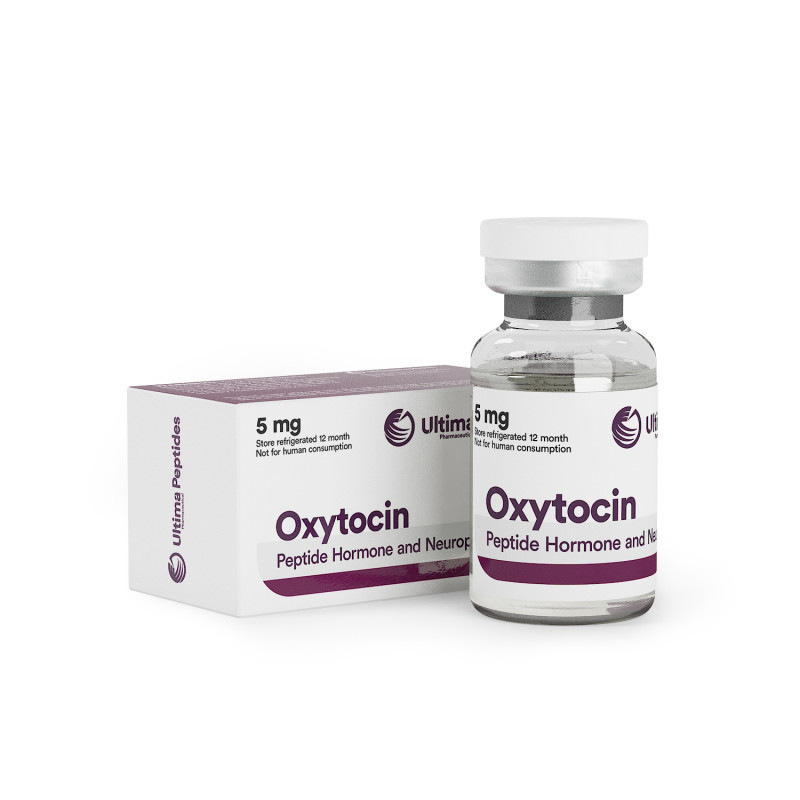
Ultima-Oxytocin 5mg
- Brand: Ultima Pharmaceuticals - US
- Product Code: Ultima-Oxytocin 5mg
- Availability: In Stock
-
$61.00
MANUFACTURER
Ultima Pharmaceuticals - US
WAREHOUSE
USA Warehouse 5
SUBSTANCE
Oxytocin
Oxytocin is a powerful hormone produced by the posterior lobe of the pituitary gland, a small yet crucial gland located at the base of the brain.
Often dubbed the "cuddle hormone" or "love hormone," oxytocin is released during intimate moments and social bonding experiences. A notable study published in 2009 revealed that even simple activities, like playing with your dog, can trigger oxytocin release. However, these affectionate nicknames can be somewhat misleading.
Hormones and BehaviorOxytocin can also amplify memories of negative bonding experiences, especially in men with troubled relationships with their mothers. Additionally, it may cause increased suspicion towards those viewed as outsiders. Consequently, the effects of oxytocin?whether it nurtures warmth or fosters distrust?are highly context-dependent.
Oxytocin in WomenOxytocin holds particular significance for women. "This peptide, produced in the brain, is well-known for its critical role in childbirth and breastfeeding," explains Larry Young, a behavioral neuroscientist from Emory University in Atlanta, Georgia.
This hormone initiates uterine contractions during labor and assists in the uterus's recovery after delivery. When a baby suckles, oxytocin is released, facilitating milk production.
Moreover, oxytocin strengthens the bond between mother and child. Research indicates that "female rats often display aversion to their pups before giving birth," according to Young. "However, post-birth, their brains undergo changes that make the pups irresistible." This phenomenon is mirrored in humans.
A 2007 study in Psychological Science found that mothers with elevated oxytocin levels during the first trimester were more inclined to engage in bonding activities, such as singing to or bathing their babies. While maternal bonding isn't always instinctual?considering that many humans adopt and nurture children?oxytocin during pregnancy "appears to motivate the connection with a baby," Young notes. Notably, studies show that when mothers interact with their infants, their babies? oxytocin levels rise too.
Oxytocin in MenIn men, oxytocin also plays a key role in fostering bonds. A 2012 study found that fathers who received oxytocin via nasal spray engaged more deeply with their 5-month-old infants compared to those who didn't receive the hormone. (It's worth noting that another hormone called vasopressin is more prominent in men.)
This complex nature of oxytocin adds depth to its narrative. One study revealed that Dutch students inhaling the hormone showed favoritism towards Dutch figures while harboring negative attitudes towards characters with Arab or German names. This indicates that oxytocin's bonding effects may primarily benefit those considered part of one's in-group, as reported in January 2011 in PNAS.
Another study published in PNAS in 2010 discovered that men who inhaled oxytocin while reflecting on their mothers were more likely to characterize their moms as caring if they had secure relationships. Conversely, those with troubled relationships viewed their mothers less favorably. This suggests that oxytocin may enhance the encoding of social memories, reinforcing prior associations?both positive and negative.
"I believe oxytocin's role in the brain is to amplify the significance of social information," Young explains. "It connects brain regions involved in processing social cues?like visuals, sounds, or scents?with the brain's reward centers."
Oxytocin Sprays and Side EffectsResearchers are investigating oxytocin nasal sprays as potential treatments for autism. Given autism's challenges with social interactions, a small 2013 study published in PNAS administered oxytocin to children and teens with the disorder and assessed their ability to identify emotions from images of people's eyes.
While the study showed no improvement in emotion recognition after oxytocin exposure, it did activate brain regions associated with social interactions. This indicates that oxytocin might support behavioral therapy for children with autism.
"When considering oxytocin for conditions like autism, it's essential to provide it in environments that encourage positive social interactions," Young emphasizes.
The use of oxytocin sprays outside of clinical settings remains uncertain. While some products claim to alleviate stress and enhance social connections, they lack FDA regulation, leaving their efficacy, potential side effects, and even actual oxytocin content unclear.
Moreover, there are no comprehensive studies on the long-term effects of legitimate oxytocin sprays used in research, as most studies administer only a single dose of the hormone. Pitocin, a synthetic form of oxytocin used intravenously to induce labor, may lead to side effects such as nausea, vomiting, and abdominal pain.