
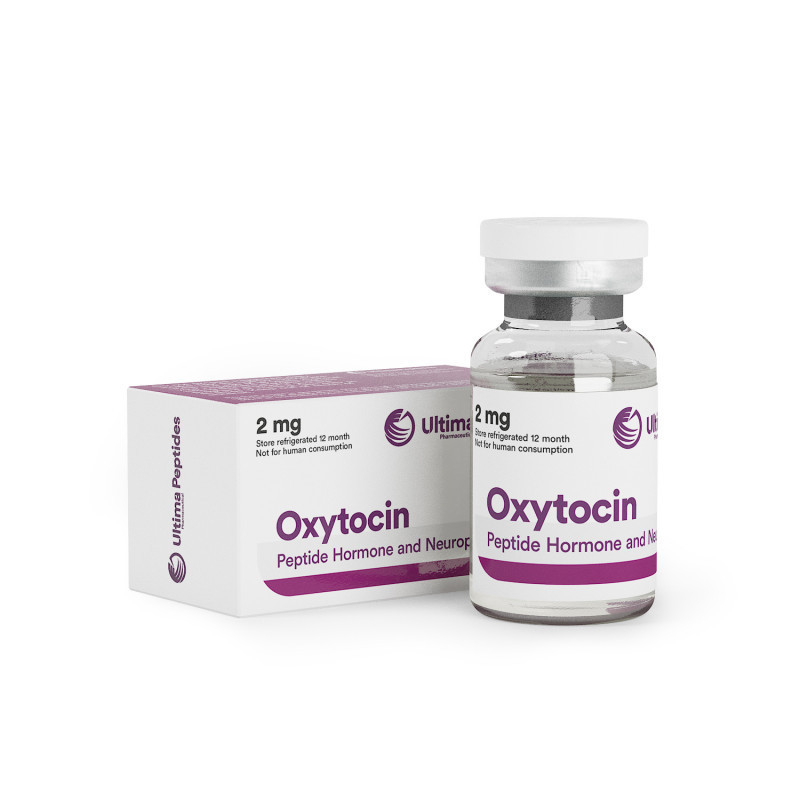
Ultima-Oxytocin 2mg
- Brand: Ultima Pharmaceuticals - US
- Product Code: Ultima-Oxytocin 2mg
- Availability: In Stock
-
$45.00
MANUFACTURER
Ultima Pharmaceuticals - USA
WAREHOUSE
USA Warehouse 5
ACTIVE INGREDIENT
Oxytocin
Your purchase of oxytocin products will be shipped discreetly without branding for your privacy and security.
Oxytocin, often dubbed the "cuddle hormone" or "love hormone," is a vital hormone produced by the posterior lobe of the pituitary gland, located at the base of the brain. It plays a significant role during moments of physical intimacy and social bonding. According to a fascinating 2009 study in the journal Hormones and Behavior, even playing with pets can stimulate oxytocin release, highlighting its importance in fostering connections. However, its effects extend beyond affection.
Remarkably, oxytocin can also intensify memories of negative bonding experiences, particularly among men dealing with complex relationships with their mothers. This duality means that oxytocin can elicit feelings of warmth or suspicion, depending on the context in which it is experienced.
Oxytocin's Impact on Women
For women, oxytocin is essential. As behavioral neuroscientist Larry Young from Emory University states, "Oxytocin is a peptide produced in the brain that was first recognized for its role in childbirth and nursing." This hormone triggers uterine contractions during labor and helps the uterus contract after delivery. When a newborn suckles, oxytocin is released, facilitating milk letdown for feeding.
Moreover, oxytocin strengthens the bond between mother and child. Research shows that "female rats find their pups aversive if they are virgins," says Young. "However, after giving birth, their brains change, and they find the pups irresistible." Similar changes occur in humans, as a 2007 study in Psychological Science revealed that mothers with higher oxytocin levels in their first trimester were more likely to engage in bonding behaviors such as singing or bathing their babies. While maternal bonding can vary, oxytocin enhances emotional connection during pregnancy, and interactions with newborns can elevate the baby's oxytocin levels too.
Oxytocin's Role in Men
In men, oxytocin also fosters bonding. A notable 2012 study found that fathers who received oxytocin via nasal spray connected more deeply with their five-month-old infants compared to those who did not receive the hormone. However, it's important to note that vasopressin, another hormone, has a stronger influence on men?s bonding behavior.
The social implications of oxytocin can be complex. A study indicated that Dutch students administered oxytocin felt more positively toward fictional characters with Dutch names while showing negativity towards those with Arab or German names. This suggests that oxytocin may facilitate bonding primarily with perceived in-group members, as detailed in a January 2011 PNAS study.
Another 2010 PNAS study found that after receiving oxytocin, men in secure relationships viewed their mothers as more caring, while those with tumultuous relationships perceived them as less caring. This points to oxytocin's ability to strengthen social memories, impacting both positive and negative associations.
Young elaborates, "Oxytocin seems to enhance the salience of social information in the brain, linking areas responsible for processing social cues?like sights, faces, sounds, or smells?to the brain's reward system."
Exploring Oxytocin Sprays and Their Side Effects
Oxytocin nasal sprays are currently being explored for their potential benefits in treating autism, a condition marked by challenges in social interaction. A small 2013 PNAS study administered oxytocin to children and adolescents with autism, prompting them to recognize emotions from photographs of people's eyes. While the participants did not show improved recognition of emotions, their social interaction-related brain regions became more active, indicating that oxytocin might enhance behavioral therapy for autistic children.
As Young notes, "When considering oxytocin as a treatment for conditions like autism, it's crucial to ensure it's used in positive social scenarios." However, the use of oxytocin sprays outside clinical settings raises questions. Many online products claim to reduce stress and enhance social interactions but lack FDA regulation, leaving their effectiveness and potential side effects uncertain.
No long-term studies have been conducted on the side effects of legitimate oxytocin sprays used in research; most studies involve a single dose of the hormone. Meanwhile, Pitocin, a synthetic oxytocin used intravenously for labor induction, has known side effects, including nausea, vomiting, and abdominal pain.